
Benefits of magnesium chloride bath include muscle relaxation, stress relief, better sleep, and hydrated skin through transdermal magnesium absorption.
Benefits of magnesium chloride bath
Magnesium chloride baths are becoming a trusted wellness ritual for relaxation and recovery. Unlike regular bath salts, they offer better transdermal magnesium absorption, helping relieve muscle soreness, reduce stress, and improve sleep quality.
Regular soaks also hydrate the skin and replenish magnesium levels, supporting overall balance and vitality. The growing awareness of these benefits of magnesium chloride bath makes it a natural choice for daily self-care.

What Is Magnesium Chloride?
Magnesium chloride is a naturally occurring mineral compound made of magnesium and chlorine, often harvested from ancient seabeds like the Zechstein Sea. It dissolves easily in warm water, making it ideal for magnesium chloride baths and topical magnesium therapy.
Compared to Epsom salts (magnesium sulfate), it offers better absorption and gentler effects on the skin, helping restore magnesium levels and support muscle relaxation and skin hydration naturally.
How a Magnesium Chloride Bath Works
When added to warm water, magnesium chloride flakes dissolve and release ions that can be absorbed through the skin — a process known as transdermal magnesium absorption. This helps replenish magnesium levels, easing muscle tension, calming the nervous system, and improving circulation.
Regular magnesium chloride baths support natural recovery, reduce stress, and promote relaxation, making them an effective and soothing way to restore the body’s mineral balance.
Benefits of Magnesium Chloride Bath
A magnesium chloride bath delivers multiple health and wellness benefits. It helps relax sore muscles, reduce inflammation, and relieve cramps after physical activity. The mineral also supports better sleep, lowers stress levels, and improves skin hydration by strengthening the natural barrier.
Regular soaks promote circulation, enhance recovery, and replenish essential magnesium levels, making the benefits of magnesium chloride bath both restorative and rejuvenating for body and mind.

Magnesium Chloride vs. Epsom Salt Baths
| Feature | Magnesium Chloride Bath | Epsom Salt Bath (Magnesium Sulfate) |
|---|---|---|
| Main Compound | Magnesium chloride (MgCl₂) | Magnesium sulfate (MgSO₄) |
| Absorption | High skin absorption through transdermal uptake | Moderate absorption, shorter-lasting effects |
| Skin Benefits | Hydrating and gentle, suitable for sensitive skin | Can be drying for some skin types |
| Primary Uses | Muscle relaxation, stress relief, skin hydration, magnesium replenishment | Detoxification, temporary pain relief, sore muscle recovery |
| Frequency of Use | Safe for regular use, 2–3 times weekly | Better for occasional use after workouts |
| Texture & Solubility | Dissolves easily in warm water, non-irritating | Coarser texture, slower to dissolve |
| Overall Benefit | Long-term magnesium support and skin nourishment | Short-term relief for muscle aches and stiffness |
Science Behind the Benefits
Scientific studies suggest that magnesium chloride baths may help increase magnesium levels in the body through transdermal absorption. Magnesium plays a vital role in muscle relaxation, nerve regulation, and skin health.
While more research is needed, many users report noticeable relief from stress and muscle tension. The growing evidence supports the benefits of magnesium chloride bath as a natural, gentle way to promote overall wellness and physical recovery.
How to Take a Magnesium Chloride Bath
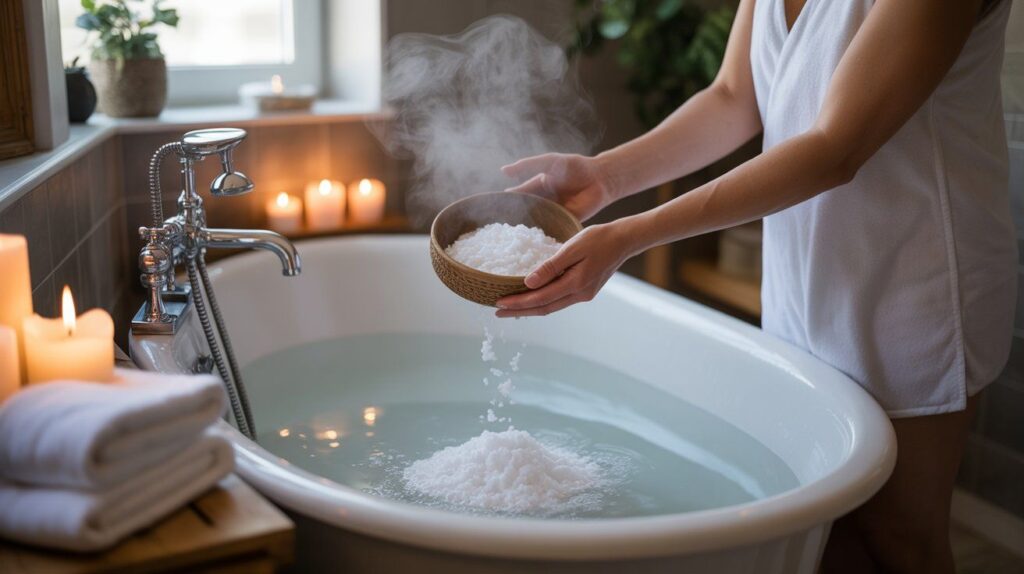
To enjoy the benefits of magnesium chloride bath, add 1–2 cups of magnesium chloride flakes to warm water and soak for 20–30 minutes. Keep the water comfortably warm, not hot, to enhance transdermal absorption. Relax, breathe deeply, and let the minerals ease tension.
For best results, repeat two to three times a week. Always rinse afterward and stay hydrated to support natural recovery and skin balance.
Safety, Precautions & Who Should Avoid It
Magnesium chloride baths are generally safe for most people, but those with kidney issues, open wounds, or skin sensitivity should consult a doctor before use. Avoid soaking if you experience irritation or discomfort. Pregnant individuals should also seek medical advice.
Always use pure magnesium chloride flakes and follow recommended amounts. When used properly, the benefits of magnesium chloride bath outweigh minor risks, promoting safe, effective relaxation and recovery.
FAQs
Q1: What are the main benefits of magnesium chloride bath?
A: It helps relieve muscle tension, promotes better sleep, hydrates skin, reduces inflammation, and supports recovery.
Q2: How often should I take a magnesium chloride bath?
A: 2–3 times a week is ideal. Overuse may cause mild skin irritation or dryness.
Q3: Can I absorb magnesium through the skin?
A: Research suggests limited but meaningful absorption, supporting relaxation and improved magnesium levels.
Q4: What’s the difference between magnesium chloride and Epsom salts?
A: Magnesium chloride offers better absorption and hydration, while Epsom salts focus on detox and muscle relief.
Q5: Are magnesium chloride baths safe for everyone?
A: Generally yes, but consult a doctor if pregnant, have kidney issues, or skin conditions.

Hamid Raza, aged 65, is a seasoned expert in nutrition, health supplements, and wellness, with over four decades of experience researching and educating people about essential minerals like magnesium. His work focuses on helping individuals improve energy, bone health, muscle function, and overall wellness through scientifically-backed magnesium knowledge.
Throughout his career, Hamid has contributed to numerous health articles, research studies, and wellness blogs, making complex nutritional science accessible to everyday readers. Passionate about natural health solutions, he guides readers on choosing the right magnesium supplements for optimal health.