
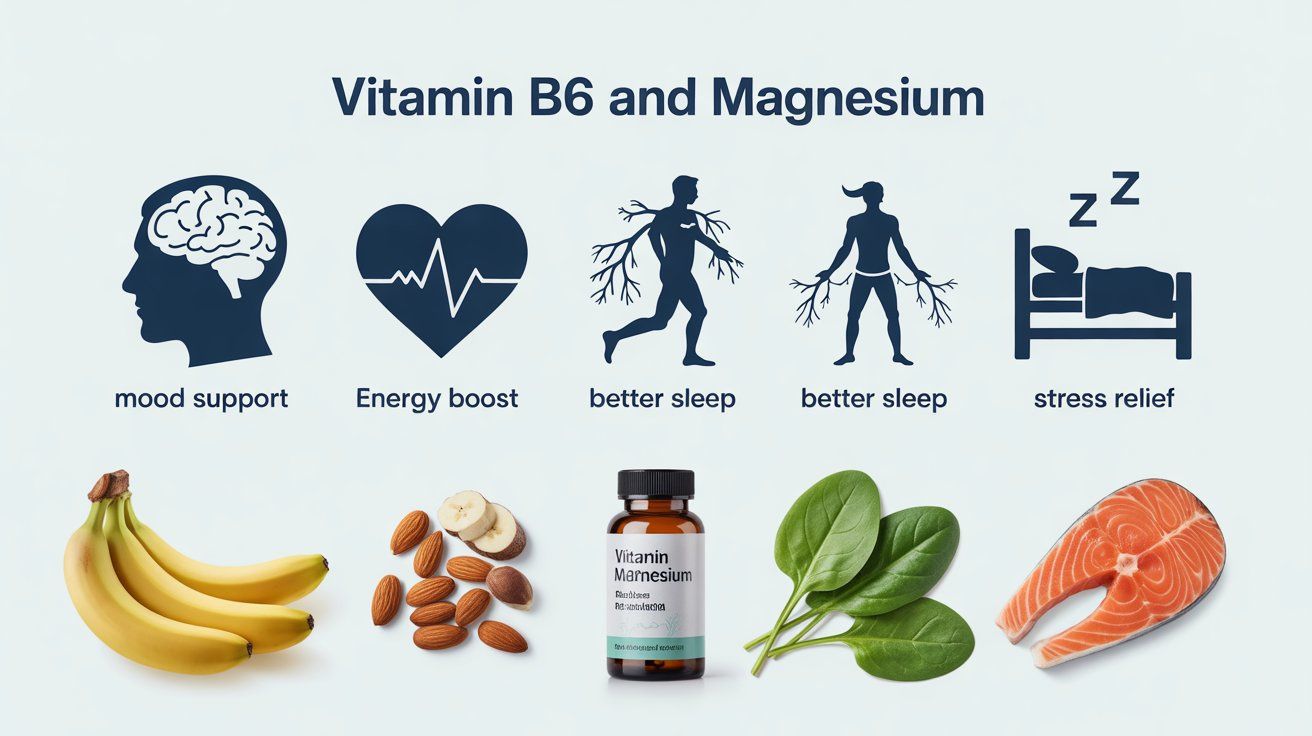
Vitamin B6 and magnesium benefits boost mood, energy, sleep, and stress relief. Together, they enhance absorption, support nerves, and promote calm focus.
Vitamin b6 and magnesium benefits
Vitamin B6 and magnesium are vital nutrients that support mood, energy, and nervous system health. When combined, they form a powerful duo that promotes calmness, better sleep, and balanced stress levels. Vitamin B6, or pyridoxine, helps produce serotonin and dopamine, while magnesium supports over 300 body functions, including muscle relaxation and energy metabolism.
Together, they work in synergy—vitamin B6 enhances magnesium absorption, boosting its effectiveness. Understanding the vitamin B6 and magnesium benefits can help improve daily focus, mood stability, and overall well-being through simple diet and lifestyle changes.
What Is Vitamin B6?
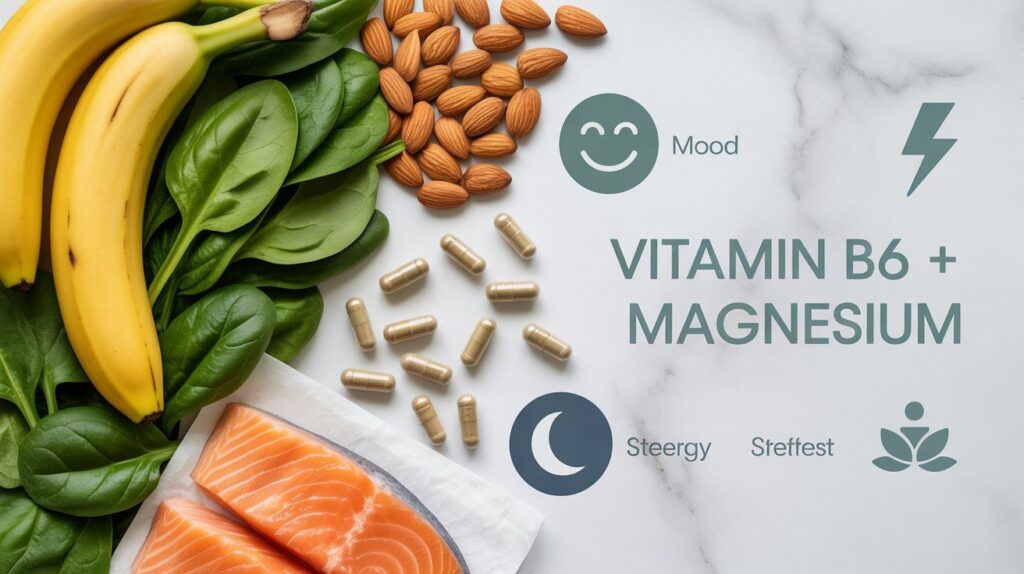
Vitamin B6, also known as pyridoxine, is a water-soluble vitamin essential for brain function, hormone balance, and immune health. It acts as a coenzyme in producing neurotransmitters like serotonin and dopamine, supporting mood and stress regulation. This nutrient also aids in protein metabolism and red blood cell formation. Deficiency in vitamin B6 may lead to fatigue, irritability, or poor concentration. Top food sources include chickpeas, salmon, bananas, and potatoes, all rich in natural vitamin B6 benefits.
What Is Magnesium?
Magnesium is a vital mineral that supports over 300 enzymatic reactions in the body, influencing energy production, muscle relaxation, and nerve function. It helps regulate sleep cycles, stress response, and heart rhythm, making it essential for overall wellness. Low magnesium levels can cause fatigue, cramps, or poor sleep quality. Top food sources include spinach, almonds, pumpkin seeds, and dark chocolate. Combining magnesium with vitamin B6 enhances absorption and strengthens the overall vitamin B6 and magnesium benefits for daily health.
How Vitamin B6 and Magnesium Work Together
Vitamin B6 and magnesium work in synergy to support the nervous system, stress relief, and energy metabolism. Vitamin B6 enhances magnesium absorption at the cellular level, allowing it to function more effectively in muscle and nerve tissues. Together, they promote serotonin production, balance mood, and reduce anxiety or restlessness. This combination is especially helpful for improving sleep quality and focus. Research shows that vitamin B6 and magnesium benefits are greater when taken together than when used individually.
Key Vitamin B6 and Magnesium Benefits
| Category | Vitamin B6 Benefits | Magnesium Benefits | Combined Synergy (Vitamin B6 + Magnesium) |
|---|---|---|---|
| Mood & Stress | Supports serotonin and dopamine production for emotional balance | Regulates stress hormones and relaxes the nervous system | Together, they reduce anxiety and promote calmness more effectively |
| Sleep Quality | Helps produce melatonin for better sleep cycles | Relaxes muscles and nerves for deeper rest | Improves sleep onset and quality naturally |
| Energy & Metabolism | Aids in converting food into usable energy | Supports ATP production and muscle function | Enhances endurance and reduces fatigue |
| Brain & Cognitive Health | Boosts neurotransmitter activity for focus and memory | Improves brain signaling and mental clarity | Strengthens concentration and cognitive performance |
| Muscle & Recovery | Prevents muscle fatigue through protein metabolism | Eases cramps and supports post-exercise recovery | Promotes faster muscle relaxation and repair |
| Heart & Circulation | Regulates homocysteine levels for heart protection | Maintains healthy blood pressure and rhythm | Supports cardiovascular health synergistically |
| Hormonal Balance | Helps regulate hormonal activity and PMS symptoms | Reduces inflammation and fluid retention | Eases PMS discomfort and hormonal fluctuations |
Best Food Sources and Supplementation Tips
You can enjoy the vitamin B6 and magnesium benefits through a balanced diet. Salmon, chickpeas, and bananas provide vitamin B6, while spinach, almonds, and pumpkin seeds supply magnesium. Pairing these foods enhances absorption and overall effectiveness. For those with higher stress or low intake, supplements can help — choose magnesium glycinate and vitamin B6 (pyridoxine HCl) for best results. Always stay within recommended doses and consult a professional before starting long-term vitamin B6 and magnesium supplementation.
Safety, Risks & Contraindications
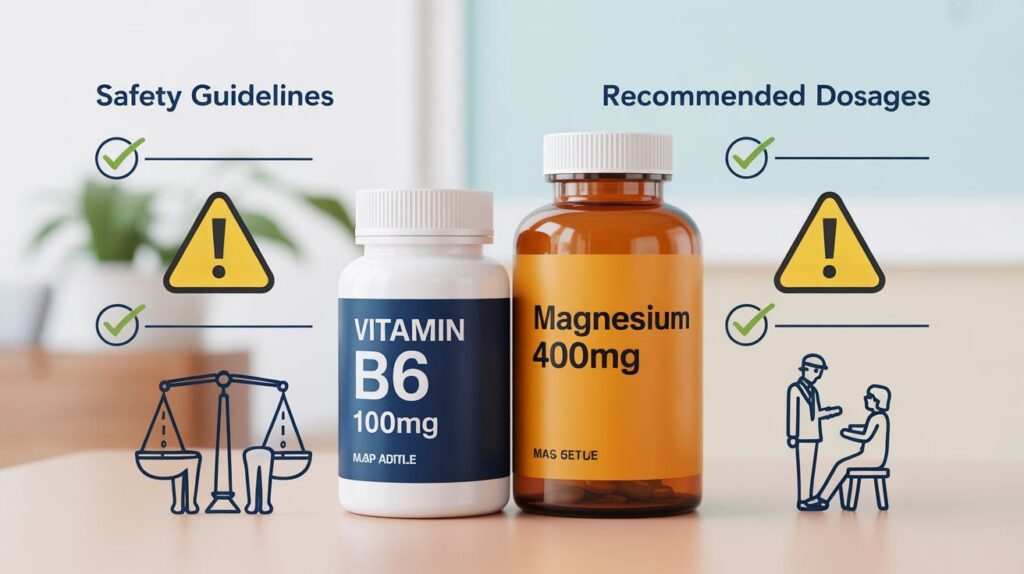
While the vitamin B6 and magnesium benefits are well-documented, excessive intake may cause side effects. High doses of vitamin B6 over time can lead to nerve irritation or numbness, while too much magnesium may cause digestive discomfort. People taking medications for blood pressure, antibiotics, or diuretics should consult a doctor before supplementing. Staying within recommended limits—under 100 mg for B6 and 400 mg for magnesium daily—ensures you gain their benefits safely without unwanted reactions or nutrient imbalances.
Daily Tips for Balanced Intake
To experience full vitamin B6 and magnesium benefits, focus on consistent, balanced intake. Eat leafy greens, nuts, legumes, fish, and whole grains daily. Pair vitamin B6-rich foods like chickpeas or salmon with magnesium sources such as spinach or seeds to enhance absorption. Stay hydrated to support mineral balance, and limit caffeine, which can deplete magnesium. Taking magnesium in the evening promotes calm and better sleep. These small, steady habits help maintain energy, mood, and nervous system health naturally.
FAQs
Q1: Can I take vitamin B6 and magnesium together?
Yes. Vitamin B6 and magnesium work together to enhance each other’s absorption and effectiveness. This combination supports mood balance, relaxation, and energy production, making it safe and beneficial for most adults when taken within recommended doses.
Q2: What is the best time to take them?
Evening is ideal. Magnesium promotes relaxation and helps the body wind down, while vitamin B6 supports melatonin production for better sleep quality.
Q3: Which foods provide both nutrients?
Foods like salmon, chickpeas, spinach, bananas, and almonds naturally deliver both vitamin B6 and magnesium benefits. Incorporating these foods daily supports energy, focus, and calmness.
Q4: What are the signs of deficiency?
Low vitamin B6 levels may cause irritability, fatigue, or poor concentration, while magnesium deficiency can lead to muscle cramps, anxiety, or restless sleep.
Q5: Are supplements safe for daily use?
Yes—if taken responsibly. Stay below 100 mg of vitamin B6 and 400 mg of magnesium per day. Always consult your healthcare provider before adding new supplements, especially if you’re on medication or managing chronic conditions.

Hamid Raza, aged 65, is a seasoned expert in nutrition, health supplements, and wellness, with over four decades of experience researching and educating people about essential minerals like magnesium. His work focuses on helping individuals improve energy, bone health, muscle function, and overall wellness through scientifically-backed magnesium knowledge.
Throughout his career, Hamid has contributed to numerous health articles, research studies, and wellness blogs, making complex nutritional science accessible to everyday readers. Passionate about natural health solutions, he guides readers on choosing the right magnesium supplements for optimal health.