
Compare aluminum vs magnesium anode rods—find out which offers better corrosion protection, longer life, and cleaner water for your water heater.
Aluminum vs magnesium anode rod
Every water heater contains a hidden guardian called an anode rod — a metal core that protects your tank from rust and corrosion. Over time, minerals and oxygen in water attack the steel interior, but the anode rod sacrifices itself so your tank doesn’t corrode.
This process, known as the sacrificial anode principle, is essential for extending the life of any water heater. The debate of aluminum vs magnesium anode rod centers on which metal offers the best protection for your home’s water quality and environment. Choosing the right anode rod can prevent costly heater damage and unpleasant odors.
How Anode Rods Protect Your Water Heater
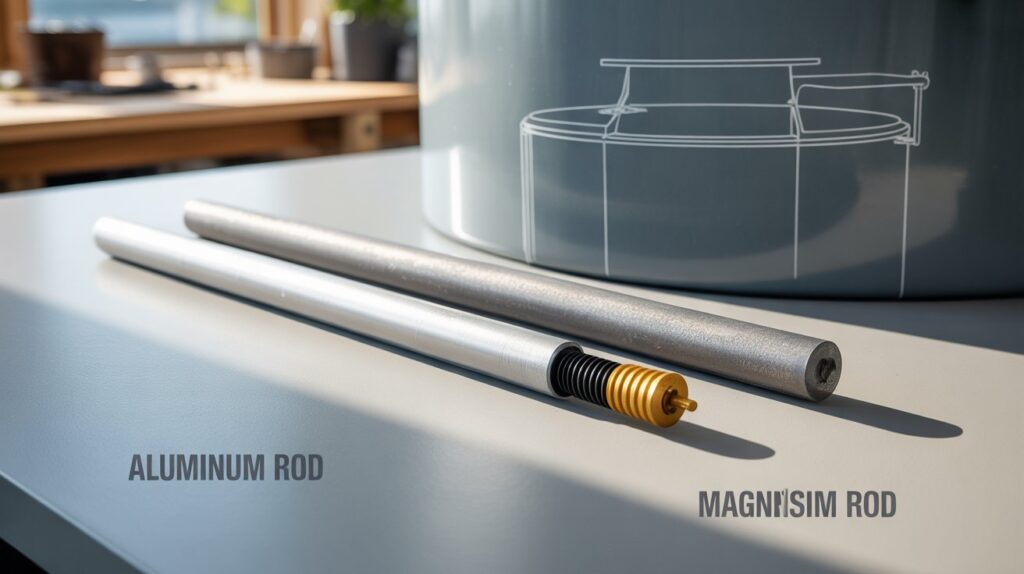
An anode rod works by attracting corrosive minerals before they attack the steel tank. This galvanic corrosion protection ensures the rod degrades instead of the heater. Magnesium rods react quickly, offering strong but shorter-term defense, while aluminum rods corrode slower and last longer in hard water. Regular inspection and replacement of the anode rod are crucial for keeping your water heater efficient and rust-free.
Aluminum vs Magnesium Anode Rod: Key Differences
The main difference between aluminum and magnesium anode rods lies in their strength and reaction rate. Magnesium rods provide more active protection but wear out faster, making them ideal for soft water systems. Aluminum rods, on the other hand, corrode slowly and perform better in hard or mineral-rich water. Choosing the right rod helps balance protection, lifespan, and water quality—preventing odor, sediment buildup, and premature tank corrosion.
Choosing Between Aluminum and Magnesium Anode Rods
| Feature | Magnesium Anode Rod | Aluminum Anode Rod |
|---|---|---|
| Best for | Soft or neutral water | Hard or mineral-rich water |
| Corrosion Protection | Strong, active protection | Moderate, slower protection |
| Water Quality | Produces cleaner, fresher-tasting hot water | May cause cloudy water in some cases |
| Lifespan | Shorter (2–5 years) | Longer (4–8 years) |
| Maintenance | Requires more frequent checks | Lower maintenance needs |
| Odor Issues | May cause “rotten egg” smell in sulfur-rich water | Less likely to cause odor |
| Cost | Slightly higher | Generally more affordable |
| Ideal Use | Homes with soft water, frequent maintenance | Homes with hard water, less frequent service |
| Overall Advantage | Superior protection and water quality | Longer life and better for hard water |
Signs It’s Time to Replace Your Anode Rod
Over time, the anode rod corrodes completely and loses its ability to protect the tank. Telltale signs include a rotten egg smell, rusty or cloudy hot water, and decreased heater efficiency. If the rod is less than half its original size or coated in calcium, it’s time for a replacement. Inspect every 2–3 years to avoid costly tank damage and maintain clean, odor-free water.
How to Replace an Anode Rod
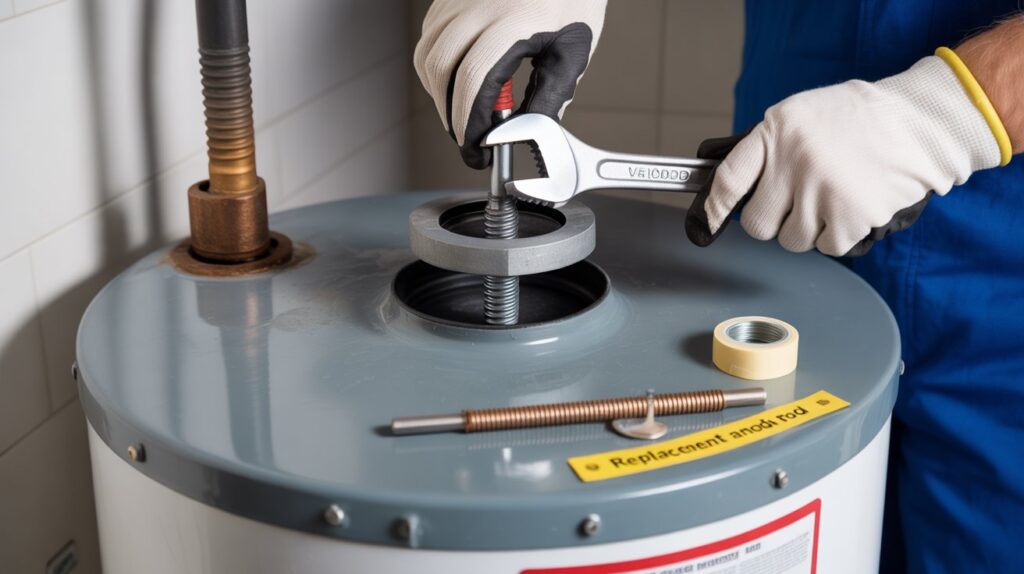
To replace an anode rod, first turn off the power and water supply, then partially drain the tank. Use a wrench to unscrew the old rod from the top and install the new one securely. Apply Teflon tape on threads to prevent leaks. Always choose a compatible size and material for your heater. If unsure, consult a professional plumber for safe installation and optimal corrosion protection.
FAQs
Q1. Is a magnesium anode rod better than aluminum?
→ Magnesium rods work best in soft or neutral water. They offer superior corrosion protection but wear faster.
Q2. Does an aluminum anode rod last longer?
→ Yes, aluminum rods generally last longer in hard water conditions but may cause more sediment buildup.
Q3. Why does my hot water smell like rotten eggs?
→ The sulfur odor often comes from magnesium reacting with bacteria in the tank. An aluminum-zinc anode rod can reduce this issue.
Q4. How often should I replace the anode rod?
→ Inspect every 2–3 years; replace every 3–5 years depending on water quality and corrosion level.
Q5. Can I switch from magnesium to aluminum?
→ Yes, you can switch materials, but check compatibility with your heater and local water hardness first.

Hamid Raza, aged 65, is a seasoned expert in nutrition, health supplements, and wellness, with over four decades of experience researching and educating people about essential minerals like magnesium. His work focuses on helping individuals improve energy, bone health, muscle function, and overall wellness through scientifically-backed magnesium knowledge.
Throughout his career, Hamid has contributed to numerous health articles, research studies, and wellness blogs, making complex nutritional science accessible to everyday readers. Passionate about natural health solutions, he guides readers on choosing the right magnesium supplements for optimal health.