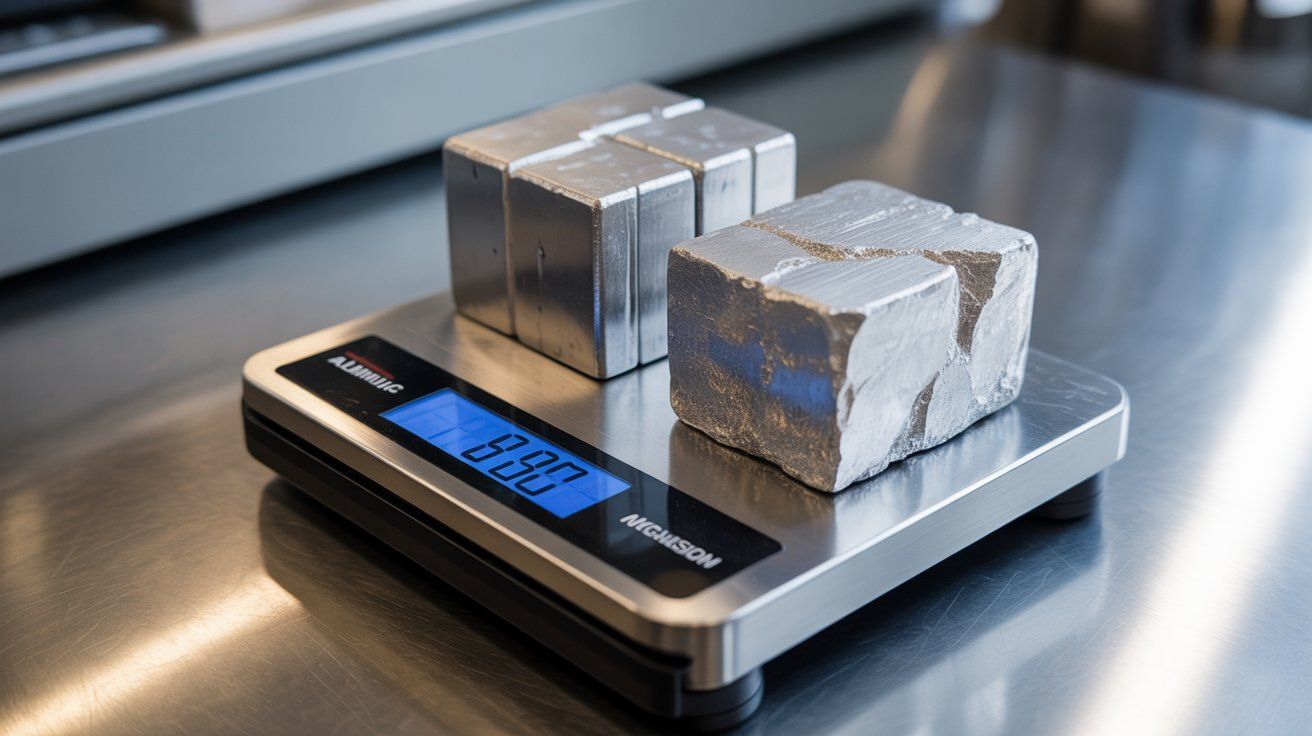
What is lighter aluminum or magnesium? Magnesium is about 35% lighter than aluminum, offering superior lightness, while aluminum provides better strength and durability.
What is lighter aluminum or magnesium
What is lighter aluminum or magnesium? It’s a key question in modern design. Magnesium is the lightest structural metal, while aluminum offers greater strength and corrosion resistance.
Weight differences affect fuel efficiency, performance, and durability in aerospace and automotive applications. Understanding their density and strength-to-weight ratio helps engineers choose the right metal for lightweight yet reliable designs.
Understanding Density: Aluminum vs Magnesium Weight Comparison
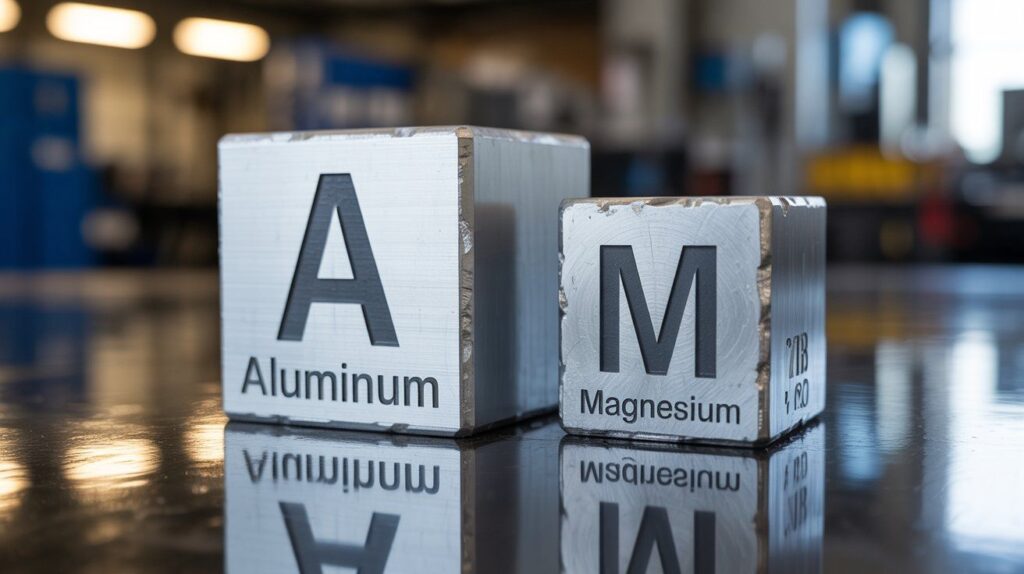
When comparing metals, density determines how light or heavy a material feels for its size. Magnesium’s density is about 1.74 g/cm³, while aluminum’s is around 2.70 g/cm³, making magnesium roughly 35% lighter.
This difference explains why magnesium is often chosen for weight-sensitive applications in aerospace and automotive design, where every gram saved improves efficiency and performance.
Strength-to-Weight Ratio and Mechanical Properties
While magnesium is lighter than aluminum, it’s also less stiff and slightly weaker. Aluminum’s higher modulus of elasticity (~70 GPa) gives it better structural strength and fatigue resistance.
However, magnesium’s superior strength-to-weight ratio makes it ideal for parts where lightness is critical. Engineers often balance weight savings with durability, depending on whether performance or strength is the top priority.
Corrosion Resistance, Durability, and Processing
Aluminum resists corrosion better than magnesium because it forms a protective oxide layer that prevents rust. Magnesium, although lighter, corrodes quickly in humid or salty environments unless coated or alloyed.
Aluminum is also easier to process and recycle, making it the preferred choice for long-lasting structures, while magnesium suits applications that demand extreme lightness but can tolerate controlled environmental exposure.
Advantages and Disadvantages of Each Metal
| Property | Magnesium | Aluminum |
|---|---|---|
| Weight | Lightest structural metal (about 35% lighter than aluminum) | Heavier but still considered lightweight |
| Strength | Lower absolute strength but good strength-to-weight ratio | Stronger and more rigid under load |
| Corrosion Resistance | Prone to corrosion; requires protective coatings | Excellent natural corrosion resistance due to oxide layer |
| Machinability | Easier to machine and form | Moderately easy to machine |
| Durability | Less durable under heat and stress | More durable and fatigue-resistant |
| Cost & Availability | Slightly higher cost; less widely available | Lower cost and highly available |
| Typical Applications | Aerospace interiors, electronics casings, and lightweight automotive parts | Structural components, body panels, and aerospace structures |
Real-World Applications — Aerospace, Automotive & Beyond
In aerospace engineering, magnesium alloys are used in seat frames, housings, and interior parts to reduce aircraft weight. Aluminum, being stronger and more corrosion-resistant, is preferred for structural components and fuselage panels.
In automotive design, magnesium lightens steering wheels and gearboxes, while aluminum dominates body panels and engine parts. Each metal’s use reflects the balance between strength, cost, and weight efficiency.
How to Choose Between Aluminum and Magnesium
Choosing between aluminum and magnesium depends on your project’s goals. If weight reduction is the top priority, magnesium is the better option. For strength, corrosion resistance, and cost efficiency, aluminum performs best.
Engineers consider factors like environmental exposure, manufacturing methods, and budget to decide which metal provides the right balance of lightness, durability, and reliability for their design needs.

FAQs
Q1. What is lighter aluminum or magnesium?
Magnesium is lighter than aluminum — about 35% less dense, making it the lightest structural metal used in engineering.
Q2. Is magnesium stronger than aluminum?
Not in absolute strength; however, magnesium offers a higher strength-to-weight ratio, which is valuable for weight-sensitive designs.
Q3. Which metal resists corrosion better?
Aluminum has superior corrosion resistance due to its natural oxide coating, while magnesium needs protective layers to prevent oxidation.
Q4. Which is better for aerospace or automotive use?
Magnesium alloys are used for weight savings, while aluminum alloys dominate for their strength, cost efficiency, and durability.
Q5. Can you mix aluminum and magnesium alloys?
Yes. Aluminum-magnesium alloys combine the lightweight benefits of magnesium with the strength and corrosion resistance of aluminum, widely used in aircraft and automotive parts.

Hamid Raza, aged 65, is a seasoned expert in nutrition, health supplements, and wellness, with over four decades of experience researching and educating people about essential minerals like magnesium. His work focuses on helping individuals improve energy, bone health, muscle function, and overall wellness through scientifically-backed magnesium knowledge.
Throughout his career, Hamid has contributed to numerous health articles, research studies, and wellness blogs, making complex nutritional science accessible to everyday readers. Passionate about natural health solutions, he guides readers on choosing the right magnesium supplements for optimal health.